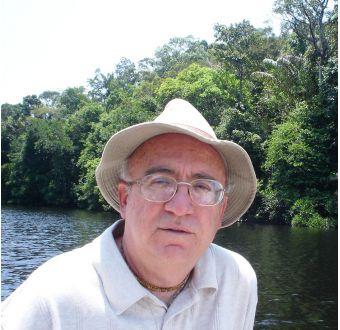
In Appreciation of Michael Cremo, aka Drutakarma Das
Some people spend their lives asking questions others would rather leave alone. Michael Cremo was one of them.
His path began unusually. As a young student at George Washington University in the late 1960s, he was training for a career in diplomacy or intelligence. Then the upheavals of that era pulled him toward Europe, and from there further east, where he found a spiritual teacher and a lifelong fascination with the ancient texts of India. Those writings describe a human past far older than the one taught in textbooks, and rather than simply accept or dismiss that idea, he decided to investigate it.
What followed was eight years of painstaking work with his colleague Richard Thompson (Sadaputa Dasa), combing through more than a century of scientific journals, field reports, and forgotten excavation records. The result, Forbidden Archeology, published in 1993, was a massive and meticulously referenced book arguing that evidence of extreme human antiquity had been set aside because it didn't fit the accepted story. Many archaeologists rejected its conclusions, yet he was invited to speak at major archaeological conferences. His critics have acknowledged the sheer scale of the research and the value of its detailed history of how science decides what counts as evidence using a 'knowledge filter.' The book became an unlikely bestseller and has been translated into over twenty languages.
What deserves admiration most is not whether one agrees with him, but how he went about it. He did not stay in the comfortable world of people who already shared his views. He submitted papers to professional conferences, presented his ideas openly before rooms full of skeptical scholars, and engaged with his critics in print. He was candid about his own spiritual commitments rather than disguising them, arguing that every researcher brings a worldview to the evidence and that honesty about it is better than pretending to perfect neutrality.
Over the decades he wrote prolifically for both academic and popular audiences, lectured around the world, and kept asking a question that matters to everyone: what is a human being, and where did we really come from? His answer, that consciousness is more than chemistry, places him in a long tradition of thinkers who refused to see people as merely machines.
On a personal level he was my mentor and friend. His cool demeanor, dry humor, and matter-of-fact style won my constant admiration. His loss is a great one to me personally and to our Institute. He was a stalwart advisor and participant in all our major projects. The only consolation is the body of brilliant literature he left behind, which will continue to inspire us.